
By: Ngurah Sigit
Amidst the relentless march of life, time flows like an ever-moving river, carrying fragments of human stories in its unstoppable current. Time is not merely numbers moving on a clock or calendar hanging in a workroom. It is a mysterious entity that presents a complex dimension in human social life, including in the realm of law that regulates the movement of civilization.
How fascinating it is to witness modern society treating time as a valuable commodity. Every second is measured with precision, every minute weighed with economic calculation, and every hour is planned with neatly arranged agendas. A paradox is created – humans who think they have conquered time have instead become slaves to the temporal chains they have forged themselves. In this vortex, the law is present as a referee that regulates the game of time in the arena of social life.
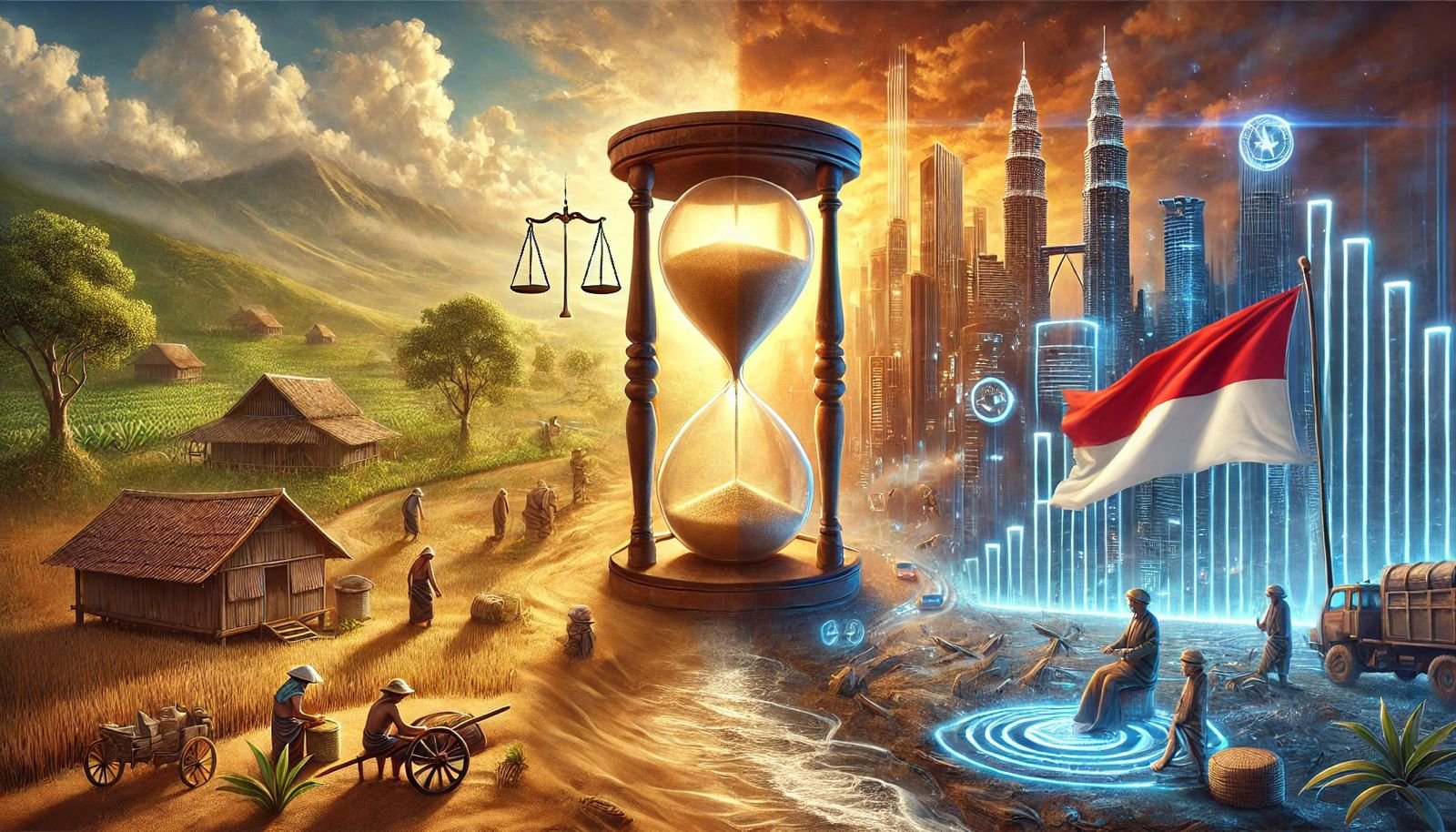
Have we ever imagined that every culture has a different “language of time?” In the corners of the countryside that still maintain traditional wisdom, time flows with a different rhythm. They dance following the rhythm of nature, counting the days with the rising sun, and measuring the seasons with natural signs. Meanwhile, in the heart of metropolitan cities, time races with digital speed, creating waves of urgency that are ceaseless.
Law, as a product of civilization, tries to bridge this gap of difference. It creates a standardization of time in the form of deadlines for filing lawsuits, periods of detention, or trial schedules. However, this standardization sometimes creates tension with diverse social realities. Imagine a traditional farmer who has to deal with a modern judicial system that uses a “language of time” that is foreign to him.
The digital era has brought a revolution in the way humans understand and manage time. The temporal walls that were once sturdy are now collapsing by the wave of digitalization. Financial transactions occur in a matter of seconds, communication flows without geographical pauses, and social activities take place in a virtual space that knows no day and night. Law, which was once accustomed to a slower and more regular rhythm, must now run to catch up with this acceleration of change.
Smart contracts are present as pioneers of the temporal revolution in the world of law. Agreements that previously took days to finalize can now be carried out in a matter of seconds. E-courts bring the judicial process to a different time dimension, where justice is no longer bound by the limitations of conventional space and time. However, behind this progress, fundamental questions about the essence of justice and human values are stored.
Time in law is not just a measuring tool – it is a mirror that reflects the values, hopes, and fears of society. When we set a time limit for a legal action, we are actually defining what we consider “reasonable” and “fair”. When we give a deadline for a legal process, we are describing social expectations about speed and efficiency.
Amidst this complexity, the sociology of legal time invites us to reflect more deeply. How to create a legal system that respects temporal diversity while maintaining certainty? How to balance the demands of efficiency with the need for a meaningful process? These questions are not just academic puzzles, but real challenges that must be answered for the future of civilization.
Time will continue to flow, taking us to new horizons that have not yet been imagined. On this journey, the law must continue to evolve, not only in substance but also in the way it understands and regulates the temporal dimension of social life. The sociology of legal time is not just a study of the past or an analysis of the present – it is a compass that helps us navigate the future, where time, law, and society will continue to dance in an eternal dance that is full of meaning.
The author is: A sociologist, cultural observer, and media observer.